

What Your Zestimate Is Getting Wrong
By Geoff Zahler | Zahler Properties
Zillow has never been inside your house.
It doesn't know about the kitchen you remodeled two years ago. It can't see that your backyard faces Red Rock Canyon instead of your neighbor's fence. It has no idea your street is one of the quieter cul-de-sacs in the village, or that the house two doors down sold $40,000 under market because the sellers were in a hurry.
But a lot of homeowners treat the Zestimate like it does.
I get it. It's right there on your screen, updated regularly, backed by a national brand with a lot of credibility. It feels like data. And in a broad sense, it is. The problem is that real estate value isn't broad. It's specific, local, and full of variables that no algorithm has ever been able to fully account for.
Here's what your Zestimate is actually measuring, where it breaks down in a market like Summerlin, and what actually determines what your home is worth.
How the Zestimate Works
Zillow's model pulls from public records, tax assessments, MLS data, and comparable sales in the surrounding area. It factors in square footage, lot size, bedroom and bathroom count, property age, and broad location data. According to Zillow's own published accuracy metrics, the nationwide median error rate is approximately 1.74% for homes that are actively listed, and 7.2% for off-market homes.
That second number is the one that matters to most people reading this. If your home isn't currently listed, the Zestimate you're looking at carries a median error of over 7%. On a $700,000 home in Summerlin, that's a potential variance of nearly $50,000 in either direction. And "median" means half of all estimates are off by more than that.
Zillow acknowledges this directly. Their own site states that the Zestimate is not an appraisal and that unreported additions, updates, and remodels are not reflected in the estimate. They're telling you the tool has limits. Most people skip that part.
Why Summerlin Specifically Breaks the Algorithm
The Zestimate struggles most in markets with significant variation within a small geographic area. Summerlin is one of the most challenging environments for any automated valuation model, for a few specific reasons.
Village-level price gaps are enormous. Summerlin is a 22,500-acre master-planned community with distinct villages and districts, each with its own character, amenities, and price profile. Right now, a standard single-family home in The Hills North might trade in the $500,000s. That same footprint in a guard-gated enclave in Summerlin South starts closer to $1 million. Then there's The Ridges, where the 2024 annual median sold price was approximately $4.44 million, with individual sales ranging from condos just over $1 million condos to well over $20 million for custom estates in Promontory. Above even that sits The Summit Club, a 555-acre private golf community where current listings range from roughly $10 million to over $35 million, and the most expensive home sold in Las Vegas in 2026 — $22.5 million — closed there. These aren't vague price differences. They're driven by gate access, architectural standards, specific view corridors, and community prestige, none of which show up meaningfully in public record data.
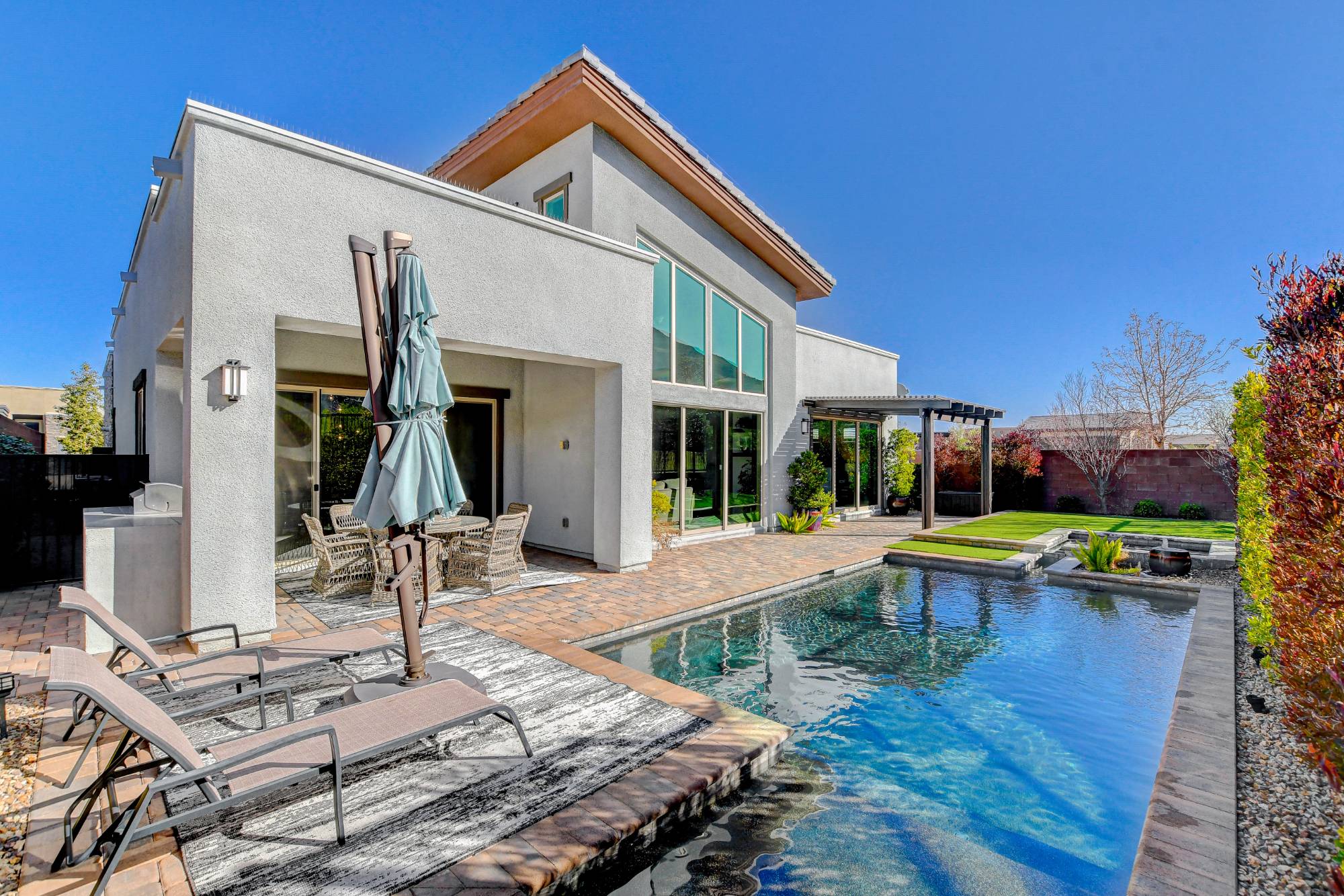
Upgrades are invisible to the model. Summerlin buyers historically invest heavily in their homes. Custom pools, outdoor kitchens, solar systems, expanded primary suites, high-end flooring, full home automation. None of this is captured in county tax records. A home with $150,000 in documented improvements and a home that was never touched can carry the same Zestimate if they have the same square footage and similar recent comps nearby.
The new construction pricing gap creates distortion. Summerlin has active new construction happening across multiple villages simultaneously, with new homes priced from the $400,000s to well over $1 million. When a new community opens and starts recording sales, those sales become comps that influence Zestimates for nearby resale homes, even when the products are substantially different. A resale home in an established village with mature landscaping, a finished backyard, and window treatments throughout is not the same value proposition as a builder-base model around the corner, but the algorithm treats nearby sales data as relatively equivalent.
Lot positioning matters in ways data can't capture. A Red Rock view lot, a home backing to open desert, a corner position with no rear neighbors, an elevated pad with Strip views at night, these are real and significant value drivers in this market. Zillow's model has no way to evaluate what you're actually looking at from your backyard.
The Direction of the Error Matters Too
One thing most people don't think about is that Zestimate errors aren't random. They tend to run in a consistent direction based on the type of property.
In Summerlin's luxury and guard-gated segments, automated valuations typically run low. The algorithm doesn't have enough comparable data at the high end, and it can't account for the premium buyers pay for a specific address, view, or level of privacy. Sellers who price based on their Zestimate in these submarkets often leave money on the table.
In more standard neighborhoods, automated valuations can run high, particularly when a seller hasn't maintained the property or when recent comps in the area were outlier sales. Buyers who rely on a Zestimate to anchor their offer expectations in these areas can end up overpaying if they don't look closely at the actual data.
Neither scenario is good. One costs sellers money. The other costs buyers money.
What Actually Determines Your Home's Value
A credible pricing analysis in this market looks at the following, none of which a Zestimate can replicate:
Recent closed sales within your specific village or district. Not the broader zip code. Not Summerlin overall. The village. A sale in The Paseos doesn't tell you much about The Ridges, and a sale in Kestrel Commons doesn't tell you much about Red Rock Country Club.
Active listings and pending sales. What is a buyer choosing between right now, today? Pricing isn't historical. It's competitive.
Property-specific condition and improvements. What has been done to the home, when, and to what standard? A full remodel by a licensed contractor with permits pulled is a different conversation than cosmetic updates.
Lot and view premiums. In Summerlin, where you sit on the land matters as much as what's built on it. This requires eyes on the property, not a data pull.
Days on market trends and absorption rate. How quickly are homes selling in this specific price band and village right now? A market can shift faster than automated tools update.
How to Use the Zestimate Correctly
None of this means Zillow is useless. It means it's a starting point, not a conclusion.
If you're a homeowner thinking about selling, your Zestimate gives you a rough ballpark. It tells you whether you're in the $500,000 range or the $900,000 range. Beyond that, you need a real market analysis before you make any decisions.
If you're a buyer using Zillow to research a neighborhood, the general pricing trends are useful. The specific property-level estimates are not reliable enough to anchor your offer strategy.
The homeowners I've seen get hurt by Zestimates are the ones who show up to a listing conversation with the number already in their head, treat it as a data point equal to a CMA, and resist adjusting when the actual market tells a different story. That rigidity costs sellers time and money more often than any other single factor.
The Bottom Line
Zillow built a remarkable tool. It's useful, widely accessible, and a legitimate starting point for anyone researching real estate. But it was built to serve a national audience at scale, not to accurately value a specific home in a specific village in one of the most segmented master-planned communities in the country.
In Summerlin, the difference between a Zestimate and an accurate market value can be significant. It can mean pricing too low and leaving equity on the table. It can mean pricing too high, sitting on the market, and eventually selling for less than you would have with the right number from day one.
If you want to know what your home is actually worth, I'm happy to walk through it with you. No obligation, no pressure, just a real number based on real data.
Geoff Zahler is the Broker/Owner of Zahler Properties, a Las Vegas-area real estate brokerage with deep roots in the Summerlin market. He has been serving buyers and sellers in the Las Vegas Valley for over a decade.
Check out this article next