

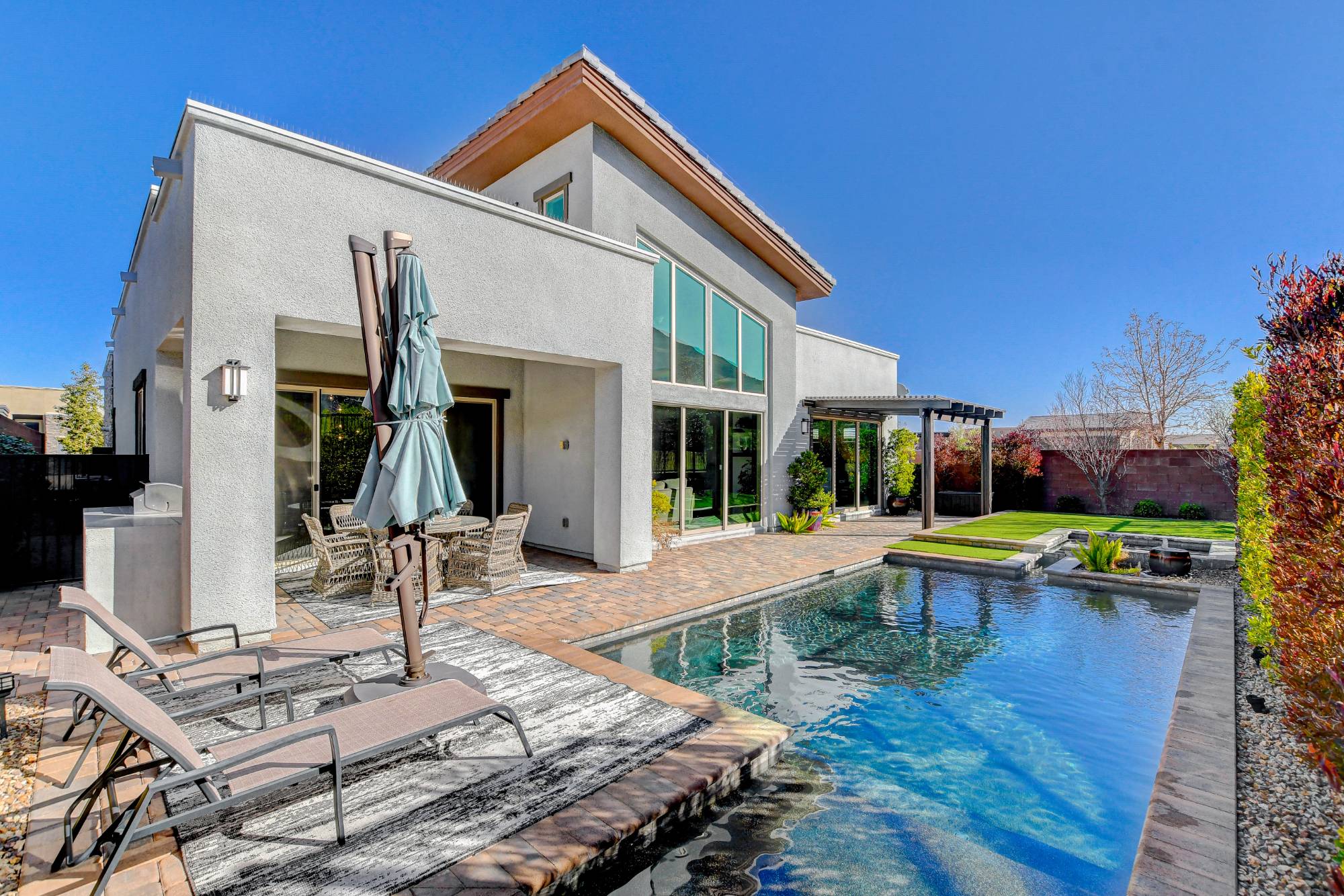

On a $500,000 Las Vegas home, the gap between putting 3 percent down and 20 percent down is $85,000 in cash at closing. At the rates Freddie Mac reported in mid-October, that $85,000 lowers your principal and interest payment by roughly $588 a month. Whether that trade makes sense depends less on a rule of thumb and more on what you would have left in the bank after closing.
If you already have a home picked out in Summerlin or anywhere else in Las Vegas, this is the decision in front of you. Here is how the four common down payment sizes compare, what each one triggers with your loan, and how I would think about it.
The four options side by side
Illustration only, using assumed figures: a $500,000 purchase price, a 30-year fixed loan at 7.40 percent (the Freddie Mac weekly average reported October 15, 2026), principal and interest only. Taxes, insurance, HOA dues and mortgage insurance are not included. Your actual rate and costs will differ.
| Down payment | Cash down | Loan amount | Est. principal and interest | Mortgage insurance? |
|---|---|---|---|---|
| 3% | $15,000 | $485,000 | about $3,358/mo | Yes (conventional PMI) |
| 5% | $25,000 | $475,000 | about $3,289/mo | Yes |
| 10% | $50,000 | $450,000 | about $3,116/mo | Yes |
| 20% | $100,000 | $400,000 | about $2,770/mo | No, on a conventional loan |
Two things jump out. First, the payment difference between 3 and 5 percent down is small, about $69 a month in this example. Second, the jump to 20 percent saves real money every month, but it also takes $85,000 more out of your pocket on day one than 3 percent does. Divide that by the monthly savings and it takes more than a decade of payments to earn it back, before you count mortgage insurance.
Who can actually put 3 percent down?
Three percent down is not available on every loan. Under Fannie Mae’s 97 percent loan-to-value options, the loan must be a fixed-rate mortgage on a one-unit primary residence (condos and PUDs included). A standard 97 percent purchase requires at least one borrower to be a first-time buyer, which Fannie Mae defines as not having owned residential property in the past three years. Its HomeReady program does not have the first-time buyer requirement but does have an income limit of 80 percent of area median income. Adjustable-rate and high-balance loans are not eligible for 97 percent financing.
FHA is the other low down payment path. HUD allows maximum financing, which is 3.5 percent down, for borrowers with a credit score of 580 or higher. FHA loans carry both an upfront and an annual mortgage insurance premium, and HUD says the amount and how long you pay it depend on the loan type, term and loan-to-value. Ask your lender to show you the FHA and conventional numbers side by side for your exact situation.
What changes once you cross 20 percent
On a conventional loan, putting less than 20 percent down usually means private mortgage insurance (PMI). The good news is that PMI on a conventional loan is not permanent. According to the Consumer Financial Protection Bureau:
- You can ask your servicer in writing to cancel PMI once your balance is scheduled to reach 80 percent of the home’s original value, or sooner if extra payments get you there. You need a good payment history, no junior liens, and you may need to show the value has not dropped.
- Your servicer generally must end PMI automatically when the balance is scheduled to reach 78 percent of the original value, as long as you are current.
- PMI must also end the month after the midpoint of the loan term, which is year 15 on a 30-year loan.
That matters for the decision. Ten percent down with PMI that eventually goes away is a very different trade than a loan where mortgage insurance stays for the life of the loan. FHA and VA loans follow different rules, so get the specifics from your lender in writing.
Las Vegas loan limits that shape the decision in 2026
In Clark County, the 2026 conforming loan limit for a one-unit home is $832,750 and the FHA limit is $541,287 (FHFA and HUD figures, as compiled by Homebuyer.com). That has a few practical effects:
- FHA has a ceiling. A buyer looking at a $650,000 Summerlin home cannot use FHA for the full loan amount, so the low down payment conversation shifts to conventional options.
- Above $832,750 is jumbo territory. If your loan amount would land above the conforming limit, the down payment you choose can decide whether you are in a conforming loan or a jumbo loan, and jumbo programs set their own down payment and reserve rules.
- Three percent is not available on high-balance loans. Per Fannie Mae, high-balance loans are not eligible for 97 percent financing.
How I would make the call
My take: the right down payment is the one that leaves you with real cash reserves after closing, not the biggest number you can scrape together. Closing costs, moving costs and the first repair that pops up all hit in the same few months. A buyer who empties every account to reach 20 percent and then has nothing left when the AC needs replacing in July has not reduced their risk.
The questions I would ask before choosing:
- What is left after closing? Add down payment, closing costs and moving costs, then look at what remains. If the answer makes you nervous, go smaller on the down payment.
- How long will you keep the home? The longer you stay, the more a lower rate and payment are worth. A short hold favors keeping cash liquid.
- What does the mortgage insurance actually cost, and when does it end? Ask for a written quote and the projected cancellation date.
- Is there a point where a little more down changes the loan? Crossing 20 percent, staying under the conforming limit, or hitting a lender’s pricing tier can matter more than the raw dollar amount.
- Do you qualify for assistance? If cash is the bottleneck, look at down payment assistance before draining reserves. Our guide to down payment assistance programs in Las Vegas covers the options.
If you are still deciding whether buying beats renting at all, the renting vs. buying breakeven math is worth running first.
Lending rules, rates and program requirements change often. Confirm specifics with your lender and, for tax questions, your CPA. Nothing here guarantees a rate, payment or approval.
Source: Freddie Mac Primary Mortgage Market Survey (October 15, 2026); Fannie Mae 97% LTV Options FAQ; HUD FHA credit score and financing guidance; Consumer Financial Protection Bureau, “When can I remove private mortgage insurance (PMI) from my loan?”; FHFA and HUD 2026 Clark County loan limits via Homebuyer.com.
Geoff Zahler | Broker/Owner, Zahler Properties