
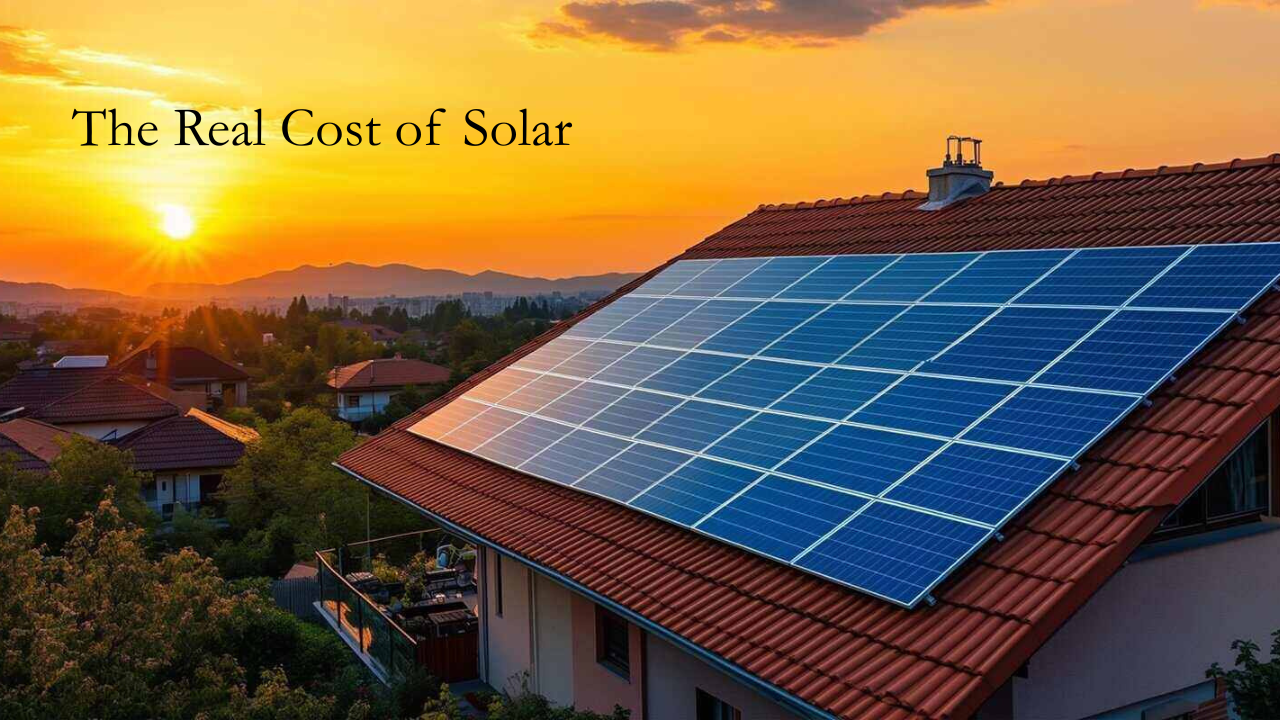
The Real Cost of Solar: It Is More Than You Realize
By Geoff Zahler | Broker/Owner, Zahler Properties | Summerlin, Las Vegas
I believe in solar. I want to say that upfront, because this is not a hit piece on the industry or the technology. Las Vegas gets over 300 days of sunshine a year, and the resource is as real as it gets. In the right situation, with the right structure, going solar makes genuine financial sense.
But after 22 years in real estate, and 14 of those specifically in the Summerlin market, I have seen what happens when homeowners make this decision without the full picture. And more often than not, the idea of solar turns out to be a lot better than the reality of how most people in Las Vegas are actually buying it.
That gap is what this post is about.
Why Las Vegas Looks Perfect for Solar on Paper
The sun argument is completely valid. We have more peak sun hours than almost any other metro in the country, and solar panels produce exceptionally well here. If you are purely looking at production potential, Las Vegas checks every box.
The issue is what you are comparing that production against. NV Energy's residential rates run around 14 cents per kilowatt-hour, which is roughly 27 percent below the national average. That is good news for your monthly utility bill. It is not-so-great news for solar return on investment, because the savings potential is smaller than it would be in a higher-rate state like California or Massachusetts.
When you purchase a system outright with cash, the math can still work. The payback period in Las Vegas typically lands somewhere in the nine to twelve year range, after which you are generating essentially free electricity. Over a 25-year system lifespan, that is a real and meaningful number.
But the vast majority of homeowners in Las Vegas are not buying their systems outright. That is where things start to fall apart.
Financing and Leasing: Where the Numbers Stop Working
Most solar installations here are either financed through a loan or structured as a lease. Both of those arrangements fundamentally change the financial picture, and not in the homeowner's favor.
A solar loan spreads your cost over time, typically ten to twenty years, with interest. When you factor that interest in, your monthly solar payment often lands very close to what you were already paying NV Energy, and in some cases it exceeds it. You are essentially trading one monthly bill for another, with the promise of ownership at the end. That ownership is real, but the near-term savings the salesperson put in front of you usually are not.
A lease is an entirely different situation. With a lease, you do not own the system at all. The solar company does. You pay a fixed monthly payment, often with an annual escalator of one to three percent built in, for twenty to twenty-five years. The company retains the tax credits. You receive electricity at a negotiated rate.
The pitch is straightforward: lower your bill with no money down. What they do not always make clear is that you have just signed a multi-decade contract with built-in payment increases, zero equity in the system sitting on your roof, and an obligation that will follow the property when you eventually sell. That last part is where I have seen real problems play out.
The Conversation Most Homeowners Never Have Before They Sign
Everything above is worth knowing before you install. But the part that genuinely catches people off guard is what happens at the closing table when it is time to sell.
Leased systems carry zero appraised value. An appraiser cannot assign value to a system you do not own. That is not a gray area; it is the rule. So even if you have been making payments faithfully for five years, none of that shows up in your appraised value, and you cannot add it to your asking price and expect a buyer or their lender to recognize it.
Buyers must qualify for the lease separately. When a home with a leased solar system goes under contract, the buyer typically needs to qualify financially to assume that lease, on top of their mortgage qualification. This is not always a dealbreaker, but it adds a layer of complexity that slows deals down and, in some cases, has been the reason a sale fell apart entirely.
The transfer process is rarely smooth. Solar companies vary widely in how organized and responsive they are. Getting lease transfer paperwork completed within a typical transaction timeline can be genuinely difficult. Some companies that were active when a system was installed are harder to track down years later. That uncertainty creates friction at closing that no one wants, and sellers often do not see it coming until they are already in contract.
In Summerlin and the luxury market, solar has become an objection. This has been a noticeable shift over the past few years. Buyers at the higher end of the market typically want to own everything they are purchasing outright. They do not want to walk into a home and inherit a twenty-year financial obligation from the previous owner. What was once positioned as a green feature and a value-add has become, in many transactions at this price point, something buyers ask to be resolved before they proceed.
When Solar Actually Works at Resale
None of this means solar is a guaranteed problem at the closing table. The structure of the deal is everything.
A system that is owned outright, fully paid off, properly documented, and appropriately sized for the home is a legitimate asset. An appraiser can value it. A buyer can understand it clearly. There is no contract to transfer, no payment to assume, and no timeline pressure around a third-party company. That transaction is clean, and that scenario is genuinely a selling point.
The problem is that scenario describes a minority of the solar installations I encounter in this market. Most of what I see are leased systems or financed systems with years left on them, and both require careful handling.
What I Would Tell Anyone Considering Solar Right Now
Talk to a real estate professional before you sign anything. I am not saying that to generate business. I am saying it because the conversation you need to have about your long-term property value is not the one the solar company is going to initiate.
Their job is to sell you a system. My job is to make sure the decisions you make about your home serve your financial interest over the long run. Those are not always aligned.
In fourteen years of working specifically in Summerlin, I have had this conversation with homeowners on both ends of it: before they installed and wishing they had thought it through, and after they installed and trying to figure out how to handle it in a sale. The first conversation is always easier.
If you are in Summerlin, Henderson, the northwest, or anywhere in the Las Vegas valley and you are considering solar, reach out before you commit. We can walk through your specific situation, look at how it is likely to affect your property value, and make sure you are going in with the full picture. No pressure, no agenda, just honest information.
Thinking about going solar? Talk to me first.
Before you sign anything, reach out. I will give you an honest, no-pressure breakdown of how solar could affect your property value and what it means when it is time to sell. That conversation costs you nothing. The wrong decision could cost you a lot more.
Geoff Zahler
Broker/Owner | Zahler Properties
Check out this article next