

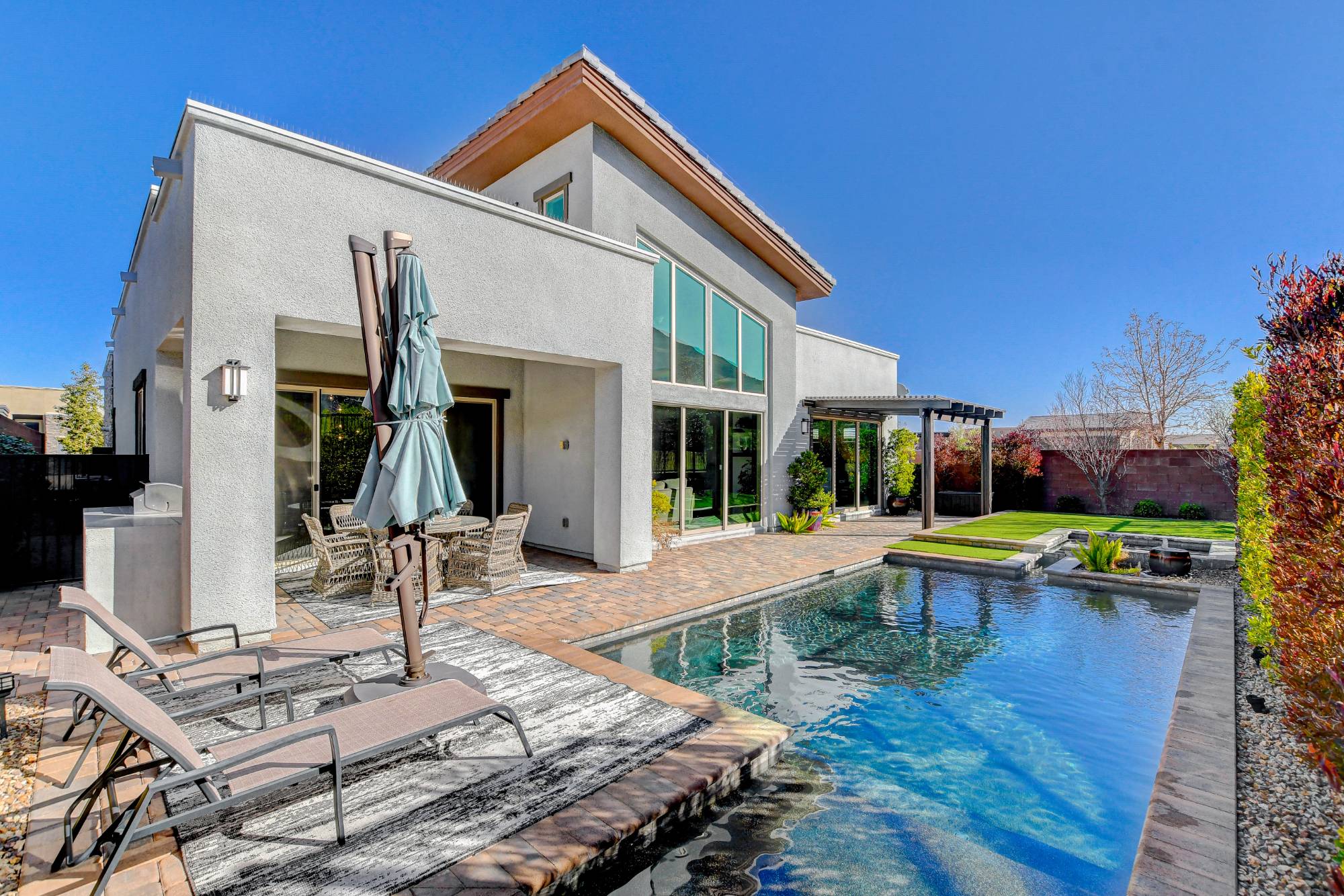

If you are writing an offer on a Las Vegas home with a pool, treat the pool as its own system with its own inspection, its own age clock and its own monthly cost, not as a backyard feature that comes free with the house. In most of the deals I see, the pool questions that matter come down to four things: how old the equipment is, whether the barrier and permits are in order, what the shell and finish look like, and what it will cost you to run every month.
I have been selling homes in this valley for more than 20 years, and pools are one of the most common places where a buyer’s budget gets surprised after closing. Here is how I walk buyers through it before the offer goes in and during the due diligence period.
What should a pool inspection actually cover?
A standard home inspection may only give the pool a quick visual look, and some inspectors exclude pools entirely or offer them as an add-on. Ask before you book. A useful pool inspection runs the equipment, checks the pump, filter and heater for leaks and noise, looks at the plaster or interior finish, the waterline tile and the coping, tests the lights and the electrical bonding, and notes the drain covers and the barrier around the pool.
If the inspector sees signs of water loss, such as a pool that is being topped off constantly, cracks in the deck or wet spots near the equipment pad, a separate leak detection test is often worth the cost before your due diligence deadline runs out.
How old is too old for pool equipment?
There is no single number, but there is a useful reference point. InterNACHI’s estimated life expectancy chart for homes lists these ranges for pool components, with the caution that they are guidelines and not guarantees:
| Pool component | Estimated life (InterNACHI) | What I ask the seller |
|---|---|---|
| Filter and pump | 10 years | Install date, any replacement receipts |
| Pool water heater | 8 years | Does it heat? Gas or heat pump? Age? |
| Interior finish (plaster or similar) | 10 to 35 years | When was it last resurfaced? |
| Waterline tile | 15+ years | Any loose or missing tile, calcium buildup |
| Cover | 7 years | Does a cover convey with the home? |
| Concrete shell | 25+ years | Any known cracks or past structural repair |
In our heat, equipment works hard, so I treat those numbers as a planning tool, not a promise. If the pump and filter are at or past the 10-year mark, I budget for replacement in the first few years of ownership and use that in negotiation. I cover the rest of the house the same way in my system-by-system age checklist for older Las Vegas resales.
Does the pool barrier and permit history matter when I buy?
Yes, especially if you have young kids or plan to. The City of Las Vegas Department of Building and Safety pool handout requires pool gates to be self-closing and self-latching, at least 60 inches high measured from outside the enclosed area, opening outward, with the latch at least 48 inches above grade. The same handout notes that fences, patio covers, barbecues and pool buildings need their own separate permits. Clark County publishes its own pool code amendments, so the exact rules depend on whether the home is in the city or in unincorporated county, which includes most of Summerlin South.
Two practical checks: look at the gates and barrier during your inspection, and ask your agent to pull permit history so you know whether the pool, any spa addition and the patio cover were permitted. An unpermitted addition is a different conversation, and it is easier to have before you are in contract.
On drain covers, federal law (the Virginia Graeme Baker Pool and Spa Safety Act) requires anti-entrapment drain covers on public pools and spas, according to the U.S. Consumer Product Safety Commission. Private residential pools are a different category, but your inspector can still tell you whether the drain covers look current and intact, and that is worth knowing for safety alone.
What does a pool cost to run in Las Vegas?
Water is the line item buyers forget. The Southern Nevada Water Authority says the average in-ground pool loses about 48.6 gallons of water per square foot per year to evaporation, which works out to as much as 22,842 gallons a year for a typical 470-square-foot Southern Nevada pool. SNWA also says a pool cover reduces evaporation by 90 percent, so whether a cover conveys with the home is a fair question to ask.
Beyond water, plan for:
- Power for the pump. Ask the seller for a few months of electric bills, especially summer months, and compare them with similar homes without pools.
- Chemicals or a pool service. Decide up front whether you will do it yourself or pay a weekly service, and get a quote before you close.
- Heating, if you want it. A heater that works costs money to run; a heater that does not work costs money to replace.
- Resurfacing and equipment reserves. If the finish or the pump is near the end of its range, set money aside now.
- Insurance. Call your insurance agent during due diligence and ask how the pool affects your premium and liability coverage.
One rule to know if you are thinking about adding or enlarging a pool later: in July 2022, SNWA supported a 600-square-foot surface area limit on new residential pools, and local agencies adopted it through their own rules. If you are buying a home with no pool and plan to add a large one, check the current limit with your jurisdiction before you count on it.
How do I use pool findings in negotiation?
The same way you use any inspection finding: be specific, prioritize, and attach a number. A pump that is noisy and 12 years old is a reasonable credit or repair request. A plaster finish that is rough but functional is usually a price-and-budget conversation, not a deal breaker. A leak or a barrier that does not latch is a safety and cost issue, and I put it at the top of the request.
In many cases, a repair credit works better than asking the seller to do the work, because you control who fixes it and how. Your specific outcome depends on the home’s condition, the price, the seller’s situation and current inventory, and there is no guarantee a seller will agree to any particular request.
Pool or no pool: is it worth it?
That is a lifestyle call. If you will use it most of the year, a well-kept pool can be a big part of why you love the house. If you will use it a few weekends a summer, be honest about the maintenance and the water. Some buyers in Las Vegas prefer a community pool instead, which shifts upkeep to the HOA; I compare that tradeoff in condo vs. townhome vs. single-family in Las Vegas.
If you are looking at a home with a pool right now and want a second set of eyes on the inspection report or the request you are about to send, call or text me. I will tell you what I would push on and what I would let go.
Sources: InterNACHI Standard Estimated Life Expectancy Chart for Homes; City of Las Vegas Department of Building and Safety swimming pool handout; Clark County ISPSC amendments; Southern Nevada Water Authority, Pools and Spas; U.S. Consumer Product Safety Commission, Pool and Spa Drain Covers.
Geoff Zahler | Broker/Owner, Zahler Properties