

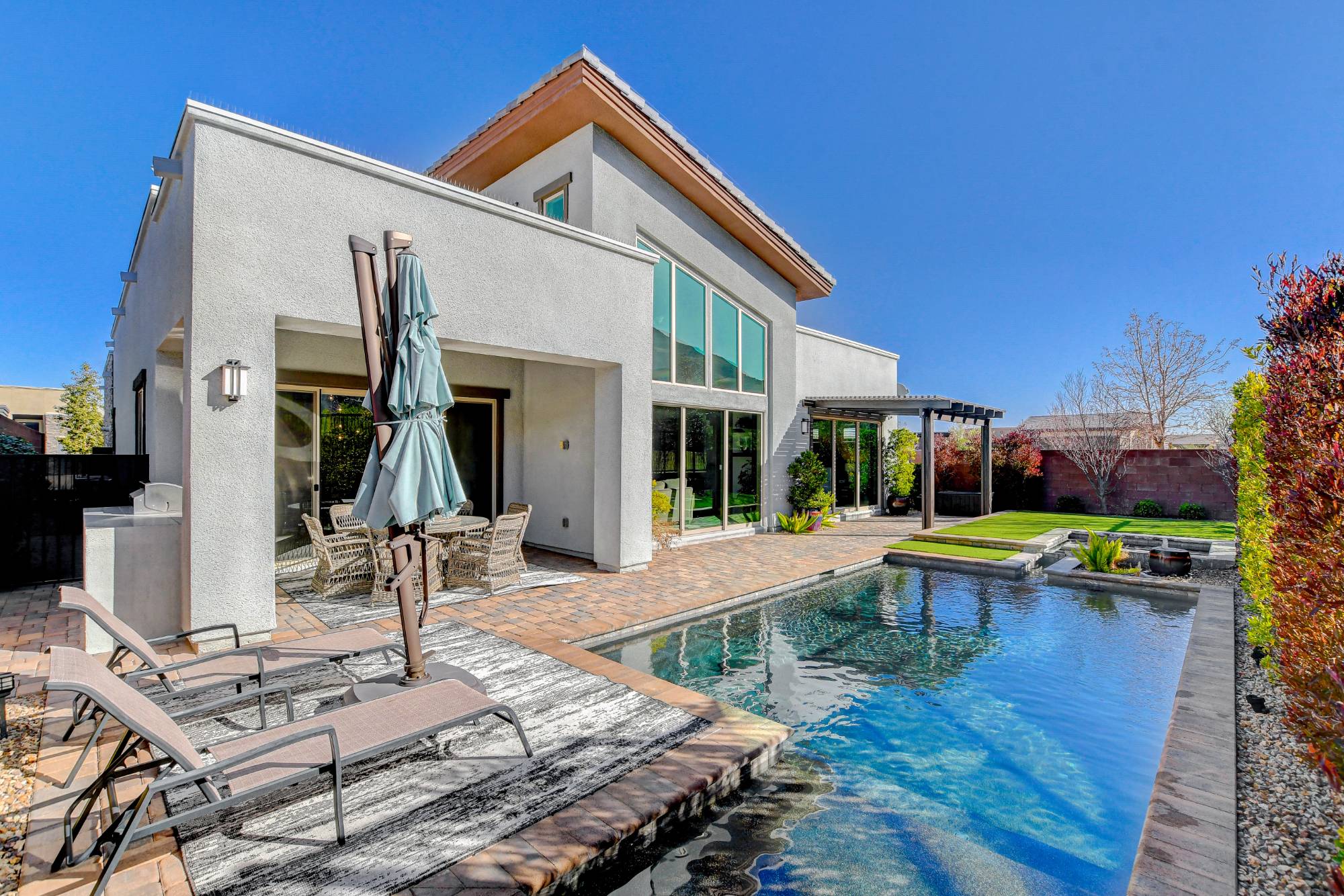

The short answer: a condo usually hands the most exterior maintenance to the HOA, a single-family home usually hands the most to you, and a townhome sits in between, but where the line falls depends entirely on the specific community’s governing documents. In Las Vegas, the right choice is less about the label and more about what you want to maintain, what you want to avoid and what you are comfortable paying monthly.
I have sold all three types for 20+ years, and the most common surprise I see is a buyer assuming “HOA” means the same thing everywhere. It does not. Two townhome communities a mile apart can split responsibilities very differently.
What is the difference between a condo, a townhome and a single-family home?
| Condo | Townhome | Single-family | |
|---|---|---|---|
| What you typically own | The interior of your unit plus a share of common areas | Varies: the unit and often the lot or footprint beneath it | The home and the lot |
| Exterior, roof, landscaping | Commonly handled by the HOA | Varies by community; check the documents | Usually you, unless an HOA or master association takes on some of it |
| Pool and amenities | Shared, maintained through dues | Often shared in some communities | Private pool is your cost, or a community amenity through dues |
| Monthly dues | Often the highest, because they cover more | Moderate to high, depending on what is included | Often lower, sometimes none in non-HOA areas |
| Space and privacy | Shared walls above, below or beside | Shared walls, usually a small yard or patio | Most privacy and yard space |
| Financing note | Lenders review the project, not just the unit | Similar project review in many cases | Standard property review |
Treat the table as a starting point, not a rule. The CC&Rs for the specific community control who maintains what.
How do condo and townhome HOA fees actually work?
Dues fund the common expenses: insurance on shared structures, landscaping, amenities, management and a reserve fund for big replacements such as roofs, paving and elevators. Nevada law (NRS 116.31152) requires the association’s board to have a reserve study conducted at least every five years, by a reserve study specialist registered with the Nevada Real Estate Division, and owners can request a copy (NRS 116.31175 sets a 21 day window to provide it). A well-funded reserve is one of the best signs of a healthy community; a thin reserve can mean special assessments later. I go deeper on this in what to check on an HOA before you write an offer.
Who is each type a good fit for?
- Condo: buyers who want a lock-and-leave routine, travel often, or want to skip exterior maintenance. A second-home buyer might also look here; see my notes on second-home financing and rental rules.
- Townhome: buyers who want some outdoor space and lower upkeep than a house, often as a middle step on the price ladder. Confirm exactly what the HOA covers.
- Single-family: buyers who want privacy, a yard, a pool or room to modify, and are comfortable owning the maintenance. In Summerlin, much of the single-family inventory also pays master association dues, which I broke down by zip code in how 89134, 89135, 89138 and 89144 compare.
What should I compare before choosing?
- Total monthly cost: mortgage, HOA dues, insurance (the HOA’s master policy changes what you need to cover), property taxes and the maintenance you will pay for yourself.
- What the dues include, in writing, from the HOA’s current documents and budget.
- The reserve study and any pending or recent special assessments.
- Rental and pet rules if either matters to you.
- Whether the community meets lender project requirements, since this can affect financing and later resale.
I deliberately did not include price or dues figures for each type here, because they vary too much by community to give one number honestly. If you are weighing two or three options, I can pull the actual dues, reserve status and recent sales for specific communities. No pressure, just a conversation about what fits how you live.
If you are also deciding whether to buy at all, see renting vs. buying in Las Vegas.
Geoff Zahler | Broker/Owner, Zahler Properties
Sources: Nevada Revised Statutes 116.31152 and 116.31175, as described in Nevada Real Estate Division Common-Interest Communities training materials (red.nv.gov). General information, not legal advice.